Wednesday, 5 December 2018

Mini TeachMeet 13

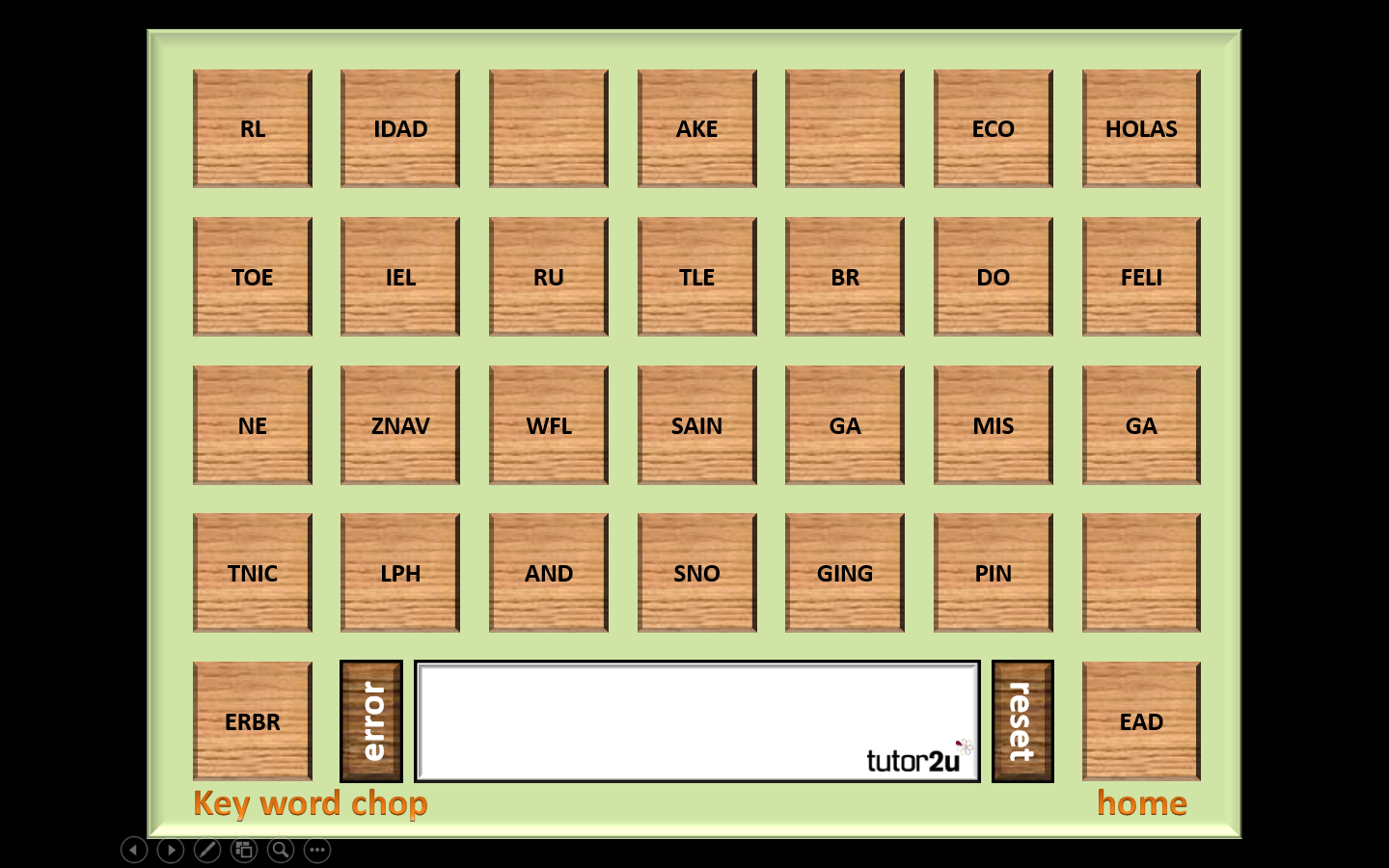
1. a. Key word chop (VT)

  • To help pupils learn keywords and spelling
  • 10-15 keywords broken down into 2 or 3 pieces and you then have to piece them together
  • Opportunity to then discuss definitions etc


b. Confidence-based marking

  • Pupils answer a multiple choice quiz but also give their confidence in the particular answers on a scale 1-3. If they are right then they get that many marks but they lose this many if they get it wrong
  • Helps students to stop guessing during multiple choice and really think about all the answers
  • Promotes competition


2. One Pen, one Dice (MHP)


  • MHP shared this game where pupils take turns to work on an activity/worksheet
  • One pupil uses the pen to complete the activity while the other rolls the die until they get a 6, at which point they swap
  • Again this promotes competition and means there is much more effort going into the completion of an activity then if the pupils had just been asked to work through it on their own.

Wednesday, 24 October 2018

Mini TeachMeet 12


1. Critical thinking (VW)


  • VW talked through the material that is being covered on the Y7 critical thinking days
  • All departments should have an overview of what is happening so they know what they can expect of the pupils and be able to draw on the experiences learned
  • Topics include
    • Memory recall
    • Time management
    • Revision techniques


2. The Teenage Brain (JLi)


  • JLi provided useful resources and links regarding the teenage brain. 
https://docs.google.com/document/d/1myoHOwju2g6n6njp8GvH4kqb1xR7OuDMgV6F2YVoXqc/edit
https://docs.google.com/document/d/1AgH65UGLa2F0KNijInVpH5_deBFOcHv8d7nLZaJDZOY/edit

Wednesday, 5 September 2018

Memory Clock and Revision

A simple way of structuring revision that is appropriate to years 10-13. It involves how pupils structure their time in revision lessons and study periods. The session will include evidence on spacing revision sessions and retrieval practice (exercises that can be built into lessons to aid memory).

Find the presentations from the session here:
https://docs.google.com/presentation/d/1p-exTfLewe1yPc8gNGpZJrHnUX74Sm4v1ExaCs2Iu9I/edit#slide=id.g13cfef6f2f_0_5
https://docs.google.com/presentation/d/1sQgaqMyuhpC_z_xJCxiG6SVAI0HbodsRjCHu7-qb1wc/edit?usp=sharing

Tuesday, 1 May 2018

Mini TeachMeet 11

1. Synopticity (JE)

  • JE explained how synopticity is a key part of the geography curriculum. This is the quality of connecting apparently separate threads of the subject and showing an awareness of how they relate, link and connect with each other to give a comprehensive understanding of the whole.
  • JE detailed how students can find this difficult and how he tries to make this more natural by using resources and artefacts in his teaching from his own hobbies and interests to model how these relate to geographical ideas/themes.
  • JE shared poems, videos, images, music videos which showed how this can be achieved in lessons.


2. Memory Clock (DNL)


  • DNL explained the Memory Clock for the benefit of those who had not been able to attend his session on the April training day. A 1 hour revision session should be broken down into 15 mins ‘Review’, 30 mins ‘Practice’ and 15 mins ‘Check’. 
  • This is to be rolled out to all staff in September and so a discussion was held as to the best way to go about this. The consensus was for an introduction by DNL and DO followed by time around department grouped tables discussing and planning subject specific examples.

Tuesday, 17 April 2018

April 2018 INSET - Mark. Plan. Teach.

In this session, DO attempted to summarise some of the strategies described in Ross Morrison McGill’s book. There are three things that every teacher must do: mark work, plan lessons and teach students well. This book is packed with practical ideas that will help teachers refine these key elements of their profession.

Access the resources from this session here:
https://drive.google.com/open?id=1U01ryPZL1qsi60Cjs1NZ9E5ViFJeLvm4

April 2018 INSET - Cognitive Load Theory


We’ve all been there. Carefully thought through a brilliant activity designed to push pupils, only to observe the resulting car crash in despair. Either pupils lack the resilience to engage with independent thought without constant teacher intervention or what little they actually end up learning requires you to spend the next lesson (time you don’t have!) re-teaching the material. In this session I’ll run through some of the most widely accepted theories of “cognitive overload” and how, if certain practices are incorporated into your teaching repertoire and SOWs at KS3 a really challenging curriculum can help pupils learn, increase pupil motivation, and also be a real joy to teach. There will also be some time to discuss ideas with colleagues and think through what it might all mean in your own subject.

Access the session resources here:
https://drive.google.com/open?id=11AmimsedSvuVnqXOZt-W-qYCE267-8Cj

April 2018 INSET - Interleaved Learning


As we all progress through our ever expanding syllabuses, both in terms of content and complexity, it is an increasing challenge to help the students remember it all. Interleaved Learning is a simple strategy that can be used throughout the year to help the students transfer information from the short to the long term memory in the hope that they can retrieve it at the vital moment.  It is all about mixing it up!

Here is a link to the resources from the session: https://drive.google.com/open?id=1SfFSMS-uz5c2H4r-Zh_4fkx4o2T5dlrD